HIV in Aotearoa
We can estimate how many people are living with HIV in Aotearoa New Zealand by looking at the number of people accessing subsidised antiretroviral treatment through Pharmac. As of March 2025, 3,534 people in Aotearoa were receiving HIV treatment.
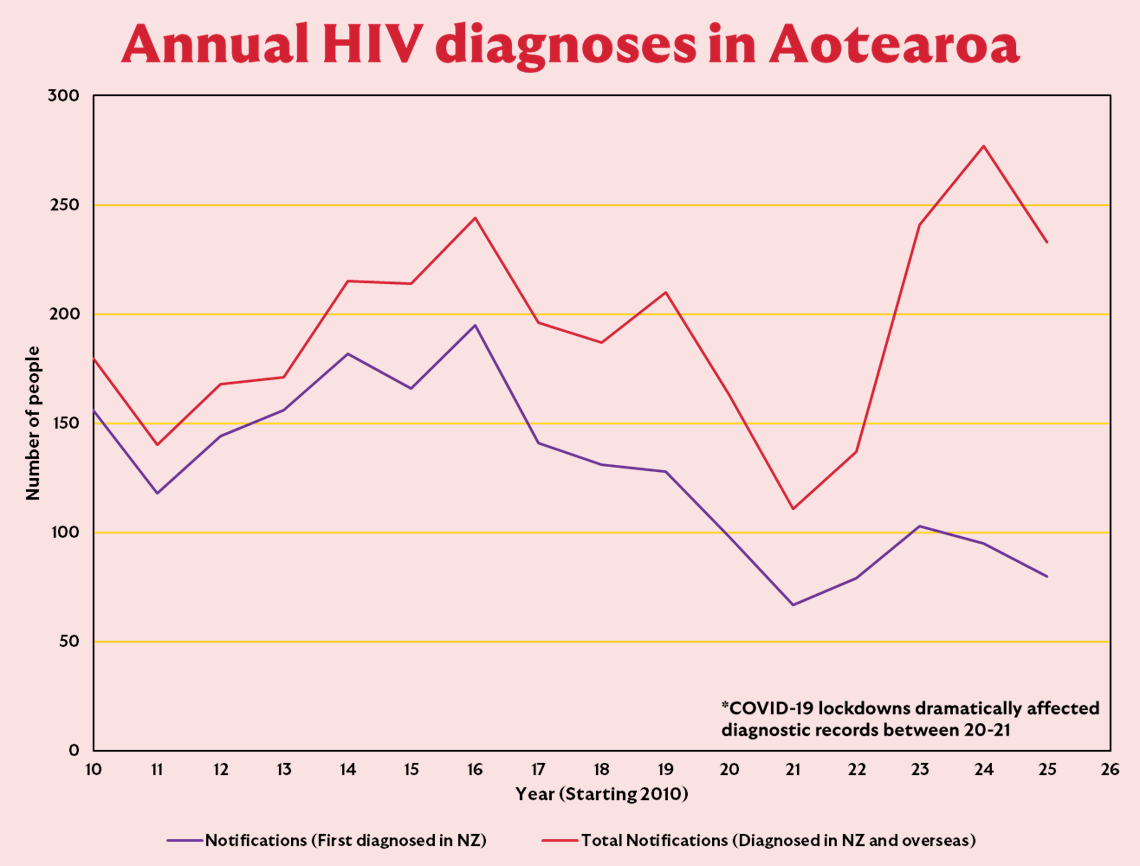
Since peaking in 2016, the number of new HIV diagnoses and locally-acquired HIV transmissions in Aotearoa have continued to decline. In 2025, 80 people were first diagnosed with HIV in New Zealand, continuing a long-term downward trend.
While this progress is encouraging, the decline in local HIV transmission is happening more slowly than needed to meet Aotearoa’s goal of reducing new local HIV transmissions by 90% by 2030. Maintaining momentum will require continued investment in prevention, testing, treatment and community-led responses.
The following data is available thanks to the HIV Epidemiology Group (HEG), based in the Department of Public Health at the University of Otago. The HEG has been responsible for national HIV and AIDS surveillance in Aotearoa New Zealand since the 1980s.
To explore detailed epidemiological data and annual surveillance reports, visit the HIV Epidemiology Group website.
In 2025:
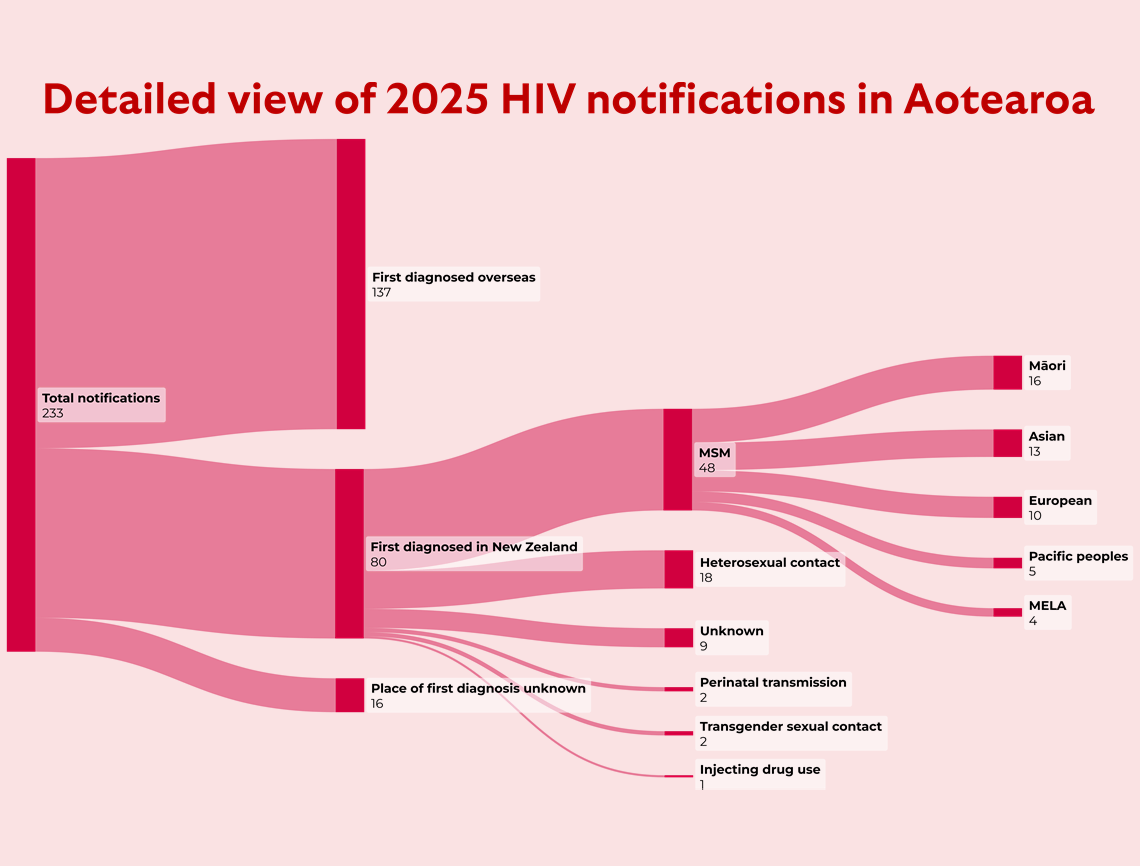
- 80 people were diagnosed with HIV in New Zealand
- 48 diagnoses were among gay, bisexual and other men who have sex with men (GBM/MSM)
- 18 people acquired HIV through heterosexual contact
- 35 MSM were thought to have acquired HIV locally
- 137 people notified with HIV had first been diagnosed overseas
- 3,534 people in Aotearoa were receiving HIV treatment
The continued reduction in locally-acquired HIV among MSM suggests prevention strategies such as PrEP, condom use, regular HIV testing, and early treatment are continuing to make a difference.
However, progress remains uneven across communities, and late diagnosis continues to be a significant issue.
Gay, bisexual and other men who have sex with men
Gay, bisexual and other men who have sex with men (MSM) continue to be the group most affected by HIV in Aotearoa.
In 2025:
- 48 MSM were diagnosed with HIV
- 35 MSM were thought to have acquired HIV in Aotearoa
- MSM accounted for 74% of all locally-acquired HIV diagnoses
The number of MSM acquiring HIV locally continues to decline from its 2016 peak, reflecting the positive impact of HIV prevention tools and increased awareness of testing and treatment.
However, this progress has not been experienced equally across all communities. The largest declines have occurred among European MSM, while Māori, Asian and Pacific MSM continue to experience disproportionate impacts from HIV.
In 2025:
- 16 MSM diagnosed with HIV were Māori
- 13 were Asian
- 5 were Pacific peoples
Clearly, not every community has benefited equally from the progress we’ve seen over the past decade. Closing those gaps will require prevention, testing and support services that are designed with communities, not just delivered to them.
Late diagnosis also remains a concern. Among MSM thought to have acquired HIV locally in 2025, 43% had a low CD4 count at diagnosis, suggesting they had been living with undiagnosed HIV for some time.
Earlier diagnosis means people can begin treatment sooner, stay healthier, and prevent onward transmission through having an undetectable viral load (U=U).
Trans and non-binary people
In 2025, two people were diagnosed with HIV through sexual contact with a transgender partner(s).
We still know relatively little about the impact of HIV on trans and non-binary communities in Aotearoa compared with some other countries. However, improved gender data collection since 2017 has helped to build a clearer picture. What we can say for certain is that ongoing access to affirming, culturally safe sexual health care and HIV prevention remains incredibly important.
Heterosexual men and women
In 2025, 18 people diagnosed with HIV in New Zealand had acquired HIV through heterosexual contact.
Of these:
- 8 were thought to have acquired HIV in Aotearoa
- 10 acquired HIV overseas
The number of locally-acquired heterosexual HIV diagnoses remains relatively low and stable compared with previous years. However, half of the locally-acquired heterosexual cases diagnosed in 2025 were considered late diagnoses.
These figures are a reminder that HIV isn’t limited to any one community, and that testing should be a normal part of healthcare for everyone.
People who inject drugs
New Zealand continues to have very low rates of HIV transmission related to injecting drug use.
In 2025, four people diagnosed with HIV reported injecting drug use, including three men who also reported sex with men. Two people were thought to have acquired HIV in New Zealand through injecting drug use.
New Zealand’s Needle Exchange Programme continues to show what can be achieved when harm reduction services are properly funded and community-led.
Perinatal transmission
In 2025, two children diagnosed with perinatally-acquired HIV were reported in New Zealand, though both had been born overseas.
Between 1998 and 2025, there were 235 births in New Zealand to women known to be living with HIV prior to delivery. None of those children acquired HIV.
Routine antenatal HIV screening and access to effective treatment continue to play a critical role in preventing perinatal transmission in Aotearoa.

AIDS in Aotearoa
AIDS (Acquired Immune Deficiency Syndrome) is the advanced stage of untreated HIV infection.
In 2025:
- 9 people were diagnosed with AIDS
- 8 AIDS-related deaths were reported
Most people diagnosed with AIDS in 2025 were diagnosed with HIV very late, meaning they had not yet had the opportunity to begin treatment before their immune system became severely compromised.
Today, most people living with HIV who are diagnosed early and remain on treatment will never develop AIDS.
Important info
Most people on effective treatment also reach an undetectable HIV viral load, which means they can't pass on HIV. This is called Undetectable = Untransmittable (U=U).
HIV and migration
In 2025, 137 people notified with HIV in New Zealand had first been diagnosed overseas.
These notifications reflect migration patterns rather than local HIV transmission. The majority (86%) had an undetectable viral load, meaning they were already on effective treatment and could not pass HIV on sexually.
Important info
People living with HIV are able to migrate to Aotearoa New Zealand, and have access to healthcare and treatment helps regardless of immigration status. This ensures that people living with HIV can continue to thrive after arriving in Aotearoa.

Progress is fragile
The continued decline in HIV transmission in Aotearoa is encouraging and reflects decades of prevention work led by communities, clinicians and public health organisations.
But progress is fragile.
Locally-acquired HIV infections have decreased by around 45% since the 2010 baseline used in the National HIV Action Plan - still short of the 90% reduction target for 2030.
Regular HIV testing, access to PrEP, early treatment, culturally responsive services and continued work to reduce stigma will all be essential if we want to keep moving towards ending new HIV transmissions in Aotearoa.
You might also be interested in



HIV 101 workshop
Our free HIV 101 workshop helps people better understand HIV, prevention, U=U, and the realities of living with HIV in Aotearoa today. It covers a range of topics including:
- The basics of HIV;
- HIV prevention strategies including ‘Stay Safe, Test Often, and Treat Early’;
- Living with HIV and challenging HIV stigma;
Each workshop runs for approximately an hour and we can tailor the content based on the duration requested and the type of audience. These can take place in person or virtually (over Teams, Zoom, Skype etc).
You can book our workshop by filling out the form below.