Taking PrEP
This page covers practical information about taking PrEP safely and effectively, including daily PrEP, 2-1-1 dosing, testing, missed doses, side effects, and stopping or restarting PrEP.
Daily PrEP
Daily PrEP involves taking one pill every day and is the most common way people use PrEP in Aotearoa New Zealand. Daily PrEP may be a good option for people who:
- Have condomless anal sex regularly
- Prefer a simple daily routine
- Want continuous HIV protection
- May not always know when sex will happen
Linking your dose to an existing routine can make it easier to remember.
PrEP 2-1-1
Some people use what’s called 2-1-1 dosing (also known as event-based or on-demand PrEP).
Rather than taking PrEP every day, 2-1-1 dosing involves taking PrEP around the time sex occurs.
The schedule is:
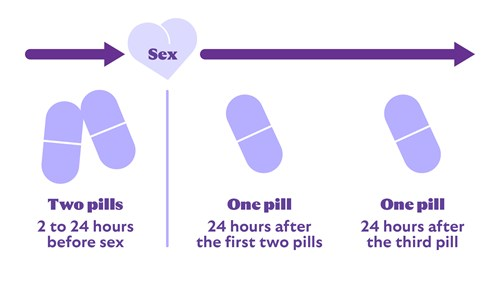
For prolonged periods of sexual activity, keep taking 1 pill every 24 hours throughout. Then, make sure to have one pill 24 hours after you last have sex, then a final pill 24 hours after the previous dose.
Important info
Current clinical guidance dictates that all new patients start on daily PrEP. You're welcome to have a conversation with your clinician about moving to PrEP 2-1-1 after your first follow up.
Is 2-1-1 suitable for everyone?
2-1-1 is currently recommended for people who were assigned male at birth, and who are not taking exogenous oestradiol-based hormone during sexual activity.
2-1-1 dosing is usually most suitable for people who are able to predict when they are likely to have sex.
If you are unsure whether daily PrEP or 2-1-1 dosing is right for you, speak with a healthcare provider.
Starting PrEP
Before starting PrEP, you will usually need:
- A negative HIV test
- Kidney function testing
- STI screening
This is important because PrEP should only be used by people who are HIV negative.
Once you begin PrEP, regular testing and sexual health check-ups become part of your ongoing care while taking PrEP.
Important info
As part of starting PrEP, you will have an HIV test. Occasionally, this test may be positive if HIV was acquired before PrEP was started.
If this happens, your clinician will support you through the next steps and discuss starting HIV treatment (ART, or antiretroviral treatment) rather than PrEP.
Modern HIV treatment is highly effective. People diagnosed today can live long, healthy lives and, once their viral load becomes undetectable, cannot pass HIV on through sex.
What if I miss a dose?
Missing an occasional dose of daily PrEP can happen. Take your next dose as soon as you remember, then continue as normal.
For people using 2-1-1 dosing, timing is particularly important, so following the schedule correctly matters.
If you:
- Regularly miss doses
- Frequently stop and restart PrEP
- Or are unsure whether you are protected
it’s a good idea to speak with your healthcare provider.
Stopping and restarting PrEP
People stop and restart PrEP for many reasons, including:
- Changes in relationships
- Changes in sexual activity
- Travel
- Side effects
- Cost
- Personal preference
If a person wishes to stop taking PrEP they must take tablets for a number of days after their last risk event to ensure they are protected.
- For cisgender men (whose HIV exposure is from sexual activity): PrEP should be taken one tablet once daily for two days after the last risk event and then stop taking PrEP.
- For everyone else: PrEP should be taken one tablet once daily for seven days after their last risk event and then stopped.
If you stop taking PrEP and later decide to restart, you may need repeat HIV testing, STI screening, and kidney function tests before starting again.
If you are unsure how to restart PrEP safely, talk with your healthcare provider.
Testing while on PrEP
Regular testing is an important part of taking PrEP. While using PrEP, you will usually need:
- Regular HIV testing
- STI screening
- Kidney monitoring
Regular testing helps monitor your overall sexual health and make sure PrEP continues to be safe and appropriate for you.
Side effects
Most people taking PrEP experience few or no side effects. Some people may notice mild symptoms when first starting PrEP, including:
- Nausea
- Headaches
- Stomach discomfort
These symptoms often improve after the first few weeks.
Your healthcare provider will monitor your kidney health through routine blood tests while you are taking PrEP.
If you experience side effects that concern you, talk with your healthcare provider before stopping PrEP.
Learn more about PrEP


FAQs
No. PrEP only protects against HIV. It does not prevent gonorrhoea, chlamydia, syphilis, hepatitis C, and any other STIs. Condoms, regular testing and other sexual health strategies remain important.
Only if you are using 2-1-1 dosing correctly and it is appropriate for you. Taking PrEP inconsistently or without following a recommended dosing schedule may reduce its effectiveness.
Alcohol and recreational drugs do not stop PrEP from working. However, being intoxicated can sometimes make it harder to remember doses or follow a dosing schedule consistently.
When taken correctly, PrEP is extremely effective at preventing HIV. However, if you missed several doses, were not taking PrEP correctly, or are concerned about a possible HIV exposure, talk with a healthcare provider as soon as possible for advice. You can also take our online ‘Been Exposed’ tool to check your risk level.